Patients Are Not Data Points
by Dr. Rajendra Pratap Gupta
3 min read • February 27, 2026
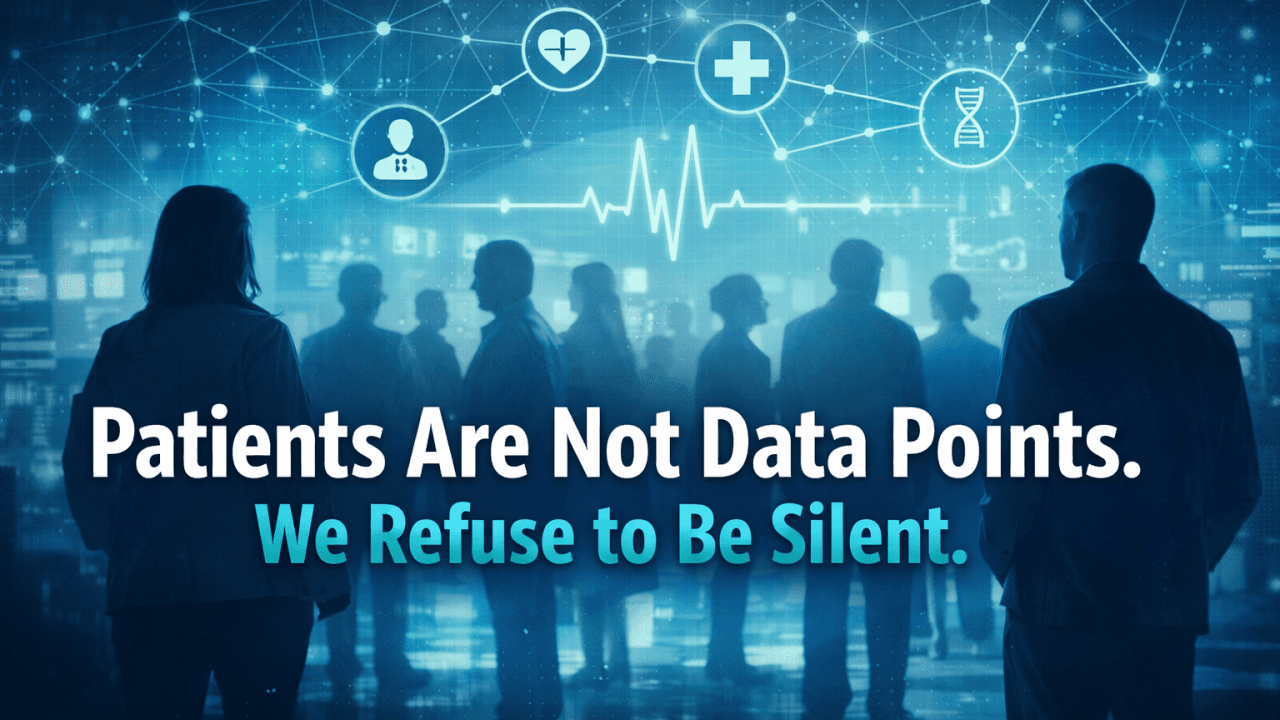
Patients Are Not Data Points. And We Refuse to Be Silent.
For decades, healthcare has spoken about patients. Rarely has it spoken with them.
Hospitals expanded. Insurance models grew complex. Pharma pipelines accelerated. Now AI promises to "revolutionize" care. Yet one uncomfortable truth remains: the system was not designed around patients, it was designed around institutions.
Let us ask a difficult question:
If patients truly sat at the center, why are they the last to be consulted?
Today, billions are being invested in artificial intelligence, digital twins, predictive analytics, and automated diagnostics. But technology without representation is not empowerment, it is extraction. Patients generate the data. Institutions monetize the data. And policies are drafted without structured patient participation.
This must change.
At the International Patients' Union, we believe the next healthcare transformation will not be technological. It will be political. It will be structural. It will be led by organized patients who understand both their rights and their responsibilities.
We have long argued that healthcare's obsession with screening is misplaced. Screening finds disease. Risk assessment prevents it. AI now allows us to move toward predictive prevention, what we have described as pre-emptive care. But here is the danger: if predictive tools are deployed without transparency, consent, and digital literacy, they could widen inequality instead of reducing it.
The real divide in the future will not be between sick and healthy. It will be between digitally empowered patients and digitally excluded ones.
Portable health records, consent-based data sharing, wearable diagnostics — these are powerful tools. But let us be clear: technology must strengthen patient autonomy, not surveillance. It must reduce unnecessary interventions, not create new markets for over-medicalization.
The global health economy runs into trillions of dollars annually. Yet patients still struggle with opaque pricing, fragmented records, unnecessary diagnostics, and policies that rarely reflect lived experience. This is not a resource problem. It is a governance problem.
We are entering an era where AI can predict risk before symptoms appear. The question is not whether we can do it. The question is: who decides how it is done?
Patients must no longer be passive recipients of care. Nor should they be romanticized as victims. They must become informed partners; organized, educated, and structurally represented in health governance.
Healthcare reform will not come from more apps. It will not come from more hospitals. It will come when patients move from the waiting room to the boardroom.
The next health revolution will not be coded in Silicon Valley or regulated in isolation. It will be shaped by collective patient voice.
Because patients are not data points.
And we refuse to be silent.
If you have a real life story that can change the perspective of healthcare, write to us at office@patientsunion.org.
Dr. Rajendra Pratap Gupta, PhD
Founder
International Patients' Union
https://patientsunion.org